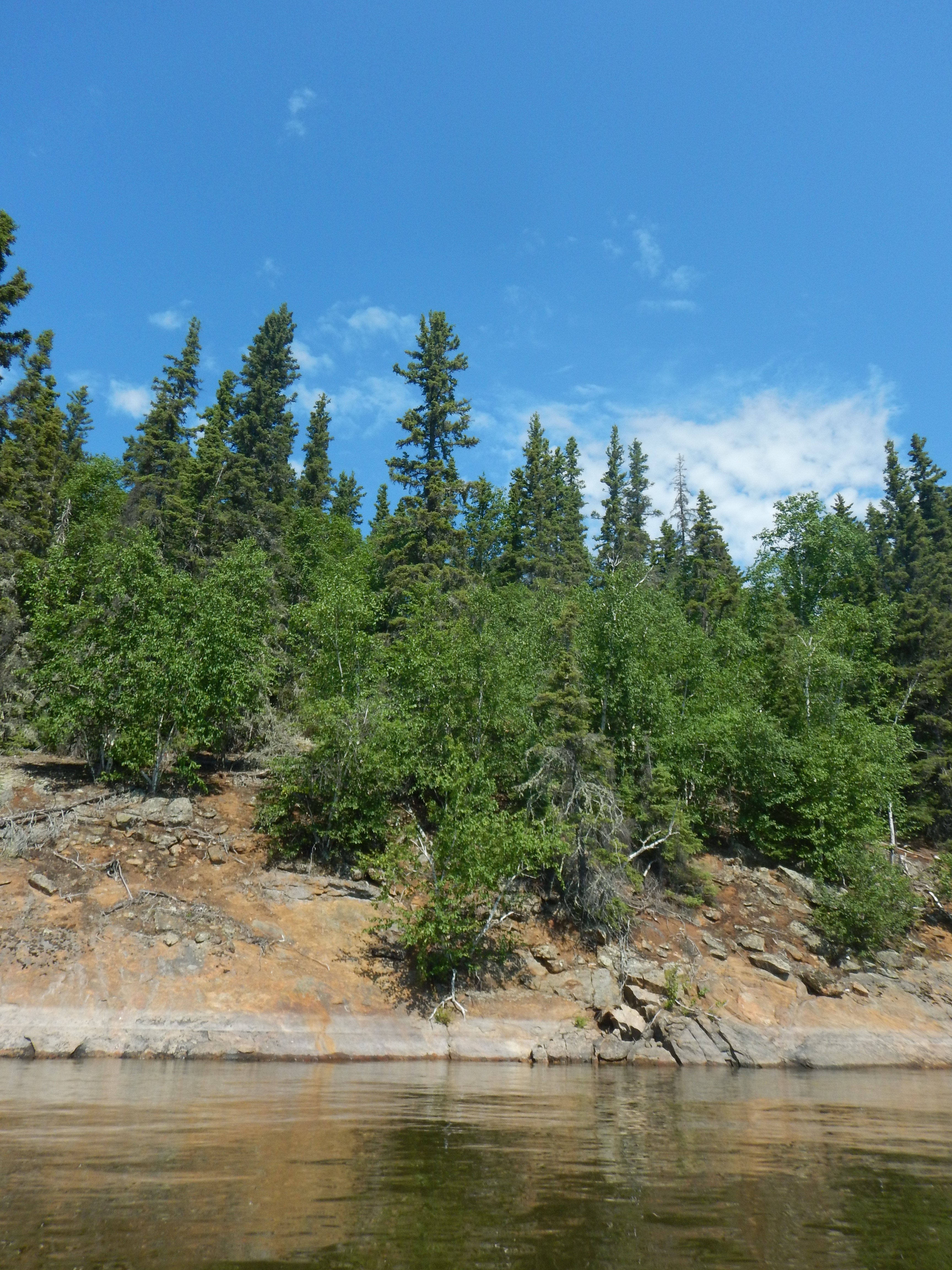
Wilderness retreat design in Canada operates under a different set of constraints than either residential construction or recreational cabin building. The combination of remote access, minimal services, regulatory complexity, and the expectation of seasonal extremes pushes every design decision — from site orientation to interior partition layout — toward specificity rather than convention.
What follows is a documentation of principles drawn from completed retreats across the Canadian Shield, the boreal belt of Ontario and Quebec, and the interior mountain regions of British Columbia. These are not prescriptive guidelines; they are patterns that appear repeatedly across successful builds and that experienced builders cite when explaining their decisions.
Defining "Remote" in a Canadian Context
In Canadian construction practice, "remote" generally describes a site where emergency services (fire, medical) response time exceeds 30 minutes, or where a site is inaccessible by paved road year-round. Under this definition, a substantial portion of northern Ontario, northern British Columbia, and virtually all of Nunavut and the Northwest Territories qualifies as remote.
Remoteness has direct design implications. Building codes in some provinces (notably Ontario and BC) have provisions for reduced or modified compliance pathways for structures in remote locations or below a square footage threshold. Understanding which provisions apply — and confirming interpretation with the relevant authority having jurisdiction (AHJ) before investing in drawings — is the first step in wilderness retreat design.
Site Relationship to Water
A consistent pattern across documented wilderness retreats is the primacy of the relationship between the structure and any adjacent water body — lake, river, stream, or wetland. This relationship is governed in every Canadian province by minimum setback regulations, which determine how close any structure can be built to the high-water mark. Setbacks vary from 15 m in some Ontario jurisdictions to 60 m or more in sensitive waterfront areas under conservation authority oversight.
Beyond regulatory setbacks, experienced designers consider visual and functional relationships between the retreat and water. A main living area with a clear sightline to the water, positioned so that the morning sun illuminates the view from the primary seating area, is a frequently documented priority. This requires knowing the compass bearing of the water body relative to the site before setting the building footprint.
Flood Risk at Remote Sites
Many desirable wilderness retreat sites are adjacent to water bodies with no historical flood data. The absence of data does not mean the absence of risk — spring snowmelt events in northern Canada can raise water levels by 1–3 m above summer baseline on undammed river systems. The standard approach is to set finished floor elevation at least 0.6 m above the recorded or estimated 100-year flood level, and ideally higher in locations where ice jam flooding is possible.
Orientation for Passive Solar and Natural Ventilation
A wilderness retreat that is not heated by a grid-connected system depends on passive energy strategies more than a conventional house does. South-facing glazing that admits low winter sun while being shaded from high summer sun by an appropriate roof overhang is a standard passive solar design principle, but it requires calculating the correct overhang depth for the building's latitude.
At 50°N (the approximate latitude of Sudbury, Ontario), the solar altitude at noon on the winter solstice is approximately 17°. A 600 mm roof overhang on a wall with 2.4 m floor-to-ceiling height allows winter sun to reach the floor approximately 2 m from the wall — useful solar gain. The summer solstice noon altitude at 50°N is approximately 63.5°, and the same 600 mm overhang shades the window entirely. This geometry is reliable and calculable, making it one of the most cost-free design decisions available.
Natural ventilation in a tightly insulated retreat requires deliberate provision. Cross-ventilation — operable windows or vents on opposite sides of the building — allows prevailing winds to draw air through the structure. In northern Ontario and the Shield regions, prevailing summer winds are generally from the southwest. Positioning larger ventilation openings on the southwest face and smaller exhaust openings on the northeast face produces a reliable stack and cross-ventilation effect without mechanical assistance.
Interior Layout for Isolation
A retreat designed for extended stays in isolation requires different interior planning than a weekend cabin. The spatial quality of individual occupancy — the ability to find privacy and quiet within a shared structure — matters as much as the overall floor area. Three layout principles recur in documentation of retreat builds used for longer stays:
Acoustic Separation Between Sleeping and Living Areas
Placing sleeping quarters at the end of a plan furthest from the entry and mechanical spaces, separated by at least one non-communicating room or a sound-absorbing partition, significantly improves sleep quality in a small structure. This is more important in a remote retreat than in a conventional residence because road noise and ambient sound that would normally mask interior sounds are absent.
A Defined Work Area
Retreats used for extended stays — whether for writing, research, or creative work — consistently incorporate a defined work area that is visually separated from both sleeping and primary living spaces. This can be a small alcove, a glassed-in porch, or a separate outbuilding. The spatial separation supports a working rhythm that is difficult to sustain when the desk is in the same room as the bed.
Utility and Entry Buffer
A mudroom or airlock entry — a thermally buffered space between the exterior and the heated interior — has functional importance in Canadian retreats beyond energy efficiency. In wilderness settings, it provides space to remove and store wet or muddy gear, to stage firewood or propane canisters, and to re-acclimatize between interior warmth and exterior cold without opening the main heated space directly to outside temperatures. In very cold conditions (-30°C and below), a direct-entry cabin without an airlock loses substantial heat with each entry and exit.
Structural Massing in the Landscape
A wilderness retreat that sits heavily in the landscape — large footprint, multiple stories, clearing cut far into surrounding trees — reads differently from one that is compact and integrated with its site. This is partly aesthetic, but it has practical dimensions as well.
Tree clearing for a large footprint increases wind exposure to the structure, which raises heating load and increases risk of wind-driven snow accumulation against walls. Retaining existing tree cover to the north and west provides a windbreak that can reduce heating load by 10–20% in exposed northern locations. Positioning a compact structure so that it reads as part of the site — rather than imposed on it — generally correlates with lower infrastructure cost, better thermal performance, and reduced regulatory scrutiny.

Fire Safety in Remote Settings
Wildfire risk at remote Canadian retreats has increased measurably over the past two decades. Natural Resources Canada's National Forestry Database tracks fire occurrence data that shows the area of forest burned annually in Canada has more than doubled from the 1970s average by the 2010s–2020s.
Retreat design in fire-prone areas (the BC interior, boreal Ontario, and northern Alberta are particularly active zones) incorporates FireSmart principles developed by the Canadian Interagency Forest Fire Centre (CIFFC). Key structural modifications include non-combustible decking and skirting materials, metal roofing rather than wood shingles, screened attic and foundation vents to prevent ember intrusion, and a 1.5–10 m non-combustible zone immediately surrounding the structure.
For retreats in remote locations, fire emergency planning also means understanding that suppression response may not arrive before a fire reaches the structure. Builds in high-risk zones document the location of water sources accessible for defensive pumping, and some include permanently installed pump systems fed from a pond or lake.
Documentation and Record-Keeping
A recurring observation in the field documentation reviewed for this archive: retreats that maintain thorough records of their construction — materials used, system specifications, as-built drawings showing wire runs and pipe locations — are measurably easier to maintain and repair over time, particularly when the original builder is not available for consultation. At remote sites where bringing in a contractor for diagnostic work is expensive, a complete as-built record allows a competent owner-operator to trace and resolve most system problems without outside assistance.
Standard documentation for a wilderness retreat build includes: survey and site plan with structure location, as-built foundation drawing, framing plan noting lumber species and dimensions, electrical schematic with panel directory, plumbing isometric showing pipe sizes and valve locations, and a mechanical summary noting equipment model numbers and service intervals.
External References
- FireSmart Canada — Canadian Interagency Forest Fire Centre
- Canada's National Forestry Database — Fire Statistics
- Ontario Conservation Authorities Act — e-Laws Ontario

